
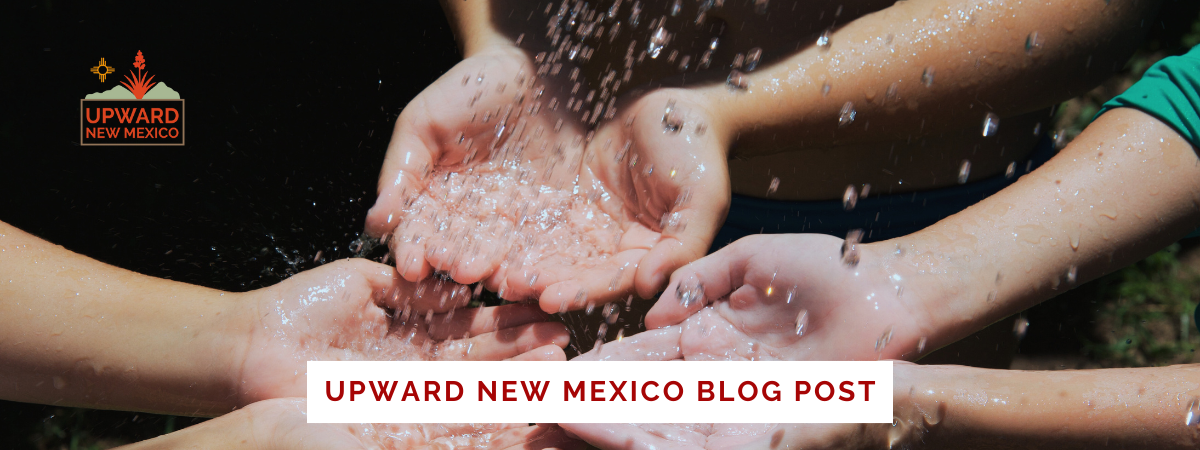
If there is one issue that should bring New Mexicans together—across regions, politics, and backgrounds—it’s water. Water is not a talking point here. It is the foundation of our communities, our agriculture, our economies, and our future.
And because it matters to everyone, water can be the place where we choose to work together instead of turning on each other.
A statewide challenge needs statewide teamwork
New Mexico is too diverse for one-size-fits-all solutions. Our water realities are different in Farmington than they are in Las Cruces, different in Mora than they are in Albuquerque. The only way to solve a statewide challenge is with statewide alignment—rural, tribal, and urban communities all pulling in the same direction.
That means we should stop acting like water is a regional competition where some communities “win” and others “lose.” It also means we should be careful about letting any narrow set of voices—no matter where they’re based—define the conversation for everyone else.
Respect and balance between rural and metro New Mexico
Here’s a truth we can acknowledge without turning it into blame: metro New Mexico depends heavily on water that originates in rural parts of the state, and rural communities have watched those resources increasingly serve urban growth and development over time.
That doesn’t make cities “bad,” and it doesn’t make rural communities “victims.” It simply means we need balance—and we need respect in both directions.
Urban communities should understand their footprint before speaking down to rural New Mexico about what should or shouldn’t be allowed on the landscape. Rural communities, in turn, deserve to be treated like equal partners—because without rural stewardship and rural water sources, the system doesn’t work for anyone.
If we want durable solutions, we need a water strategy that recognizes interdependence instead of pretending we live in separate worlds.
Turning “waste” into opportunity through produced water and brackish innovation
New Mexico has a major opportunity sitting in front of us: taking water currently treated as a liability and turning it into an asset through science, technology, and modern infrastructure.
Produced water—often described as ancient seawater brought to the surface during oil and gas production—has historically been managed as a waste stream. But the direction of travel is changing: the New Mexico Produced Water Research Consortium (NMPWRC) exists specifically to close the scientific and technical gaps needed for protective, science-based approaches to treatment and reuse.
At the same time, New Mexico has deep expertise in broader water research and solutions through the New Mexico Water Resources Research Institute (NM WRRI), which has been funding and coordinating research on water problems critical to New Mexico and the Southwest for decades.
And this is where the practical point matters: while New Mexico debates and delays, other states are moving—and we risk staying stuck managing produced water like a burden while others turn similar challenges into competitive advantages.
The point isn’t to rush. The point is to stop stalling.
Infrastructure is the missing link
Innovation doesn’t help communities unless it scales into real-world systems: treatment facilities, pipelines, monitoring, storage, and trained operators who can run them safely.
New Mexicans don’t need endless arguments about whether innovation is possible—we need the investments that make it real. That means committing to facilities and treatment capacity and building a framework where research can turn into deployed solutions.
And when we invest in water technology—whether it’s produced water, brackish water, or improved monitoring—we don’t just solve one problem. We create tools that can help communities across the state.
Frontline communities should be first in line
If New Mexico is serious about being “responsive” and “people-first,” then the communities facing the most immediate water challenges must be prioritized—not just consulted.
When rural regions are dealing with contamination concerns, post-wildfire impacts, or limited capacity to test and treat water, the answer cannot be: “Good luck—figure it out on your own.” A statewide water strategy should make it easier for communities like Mora and San Miguel to access modern testing, treatment pathways, and technical assistance—without having to reinvent the wheel one county at a time.
Let water be what unites us
New Mexico can choose a better path—one where water becomes the issue that brings us together:
- Urban New Mexico acknowledging its reliance and impact
- Rural and tribal New Mexico being treated as respected partners and stewards
- State leadership empowering regional solutions rather than forcing cookie-cutter answers
- Science and technology driving decisions, not fear or slogans
- Investment turning innovation into real infrastructure and real resilience
We don’t need to agree on every detail to agree on the mission: protecting water, expanding supply options, and building a future where our kids don’t have to leave New Mexico to find opportunity.
Water is common ground. If we get this right—together—we can get a lot of other things right too.